


The "Metamorphosis" of a Hawthorn: Unveiling the Complete Industry Chain from Fresh Fruit to Snack
2026-02-06浏览量:21
The bright red, tangy hawthorn berry is a flavour symbol etched in the memories of generations. From a fresh fruit on wild branches to diverse snacks on shelves, this small fruit's journey of "transformation" encompasses an entire precisely coordinated, technology-enabled industrial chain, whilst also carrying the fusion of traditional flavours with modern food industry.
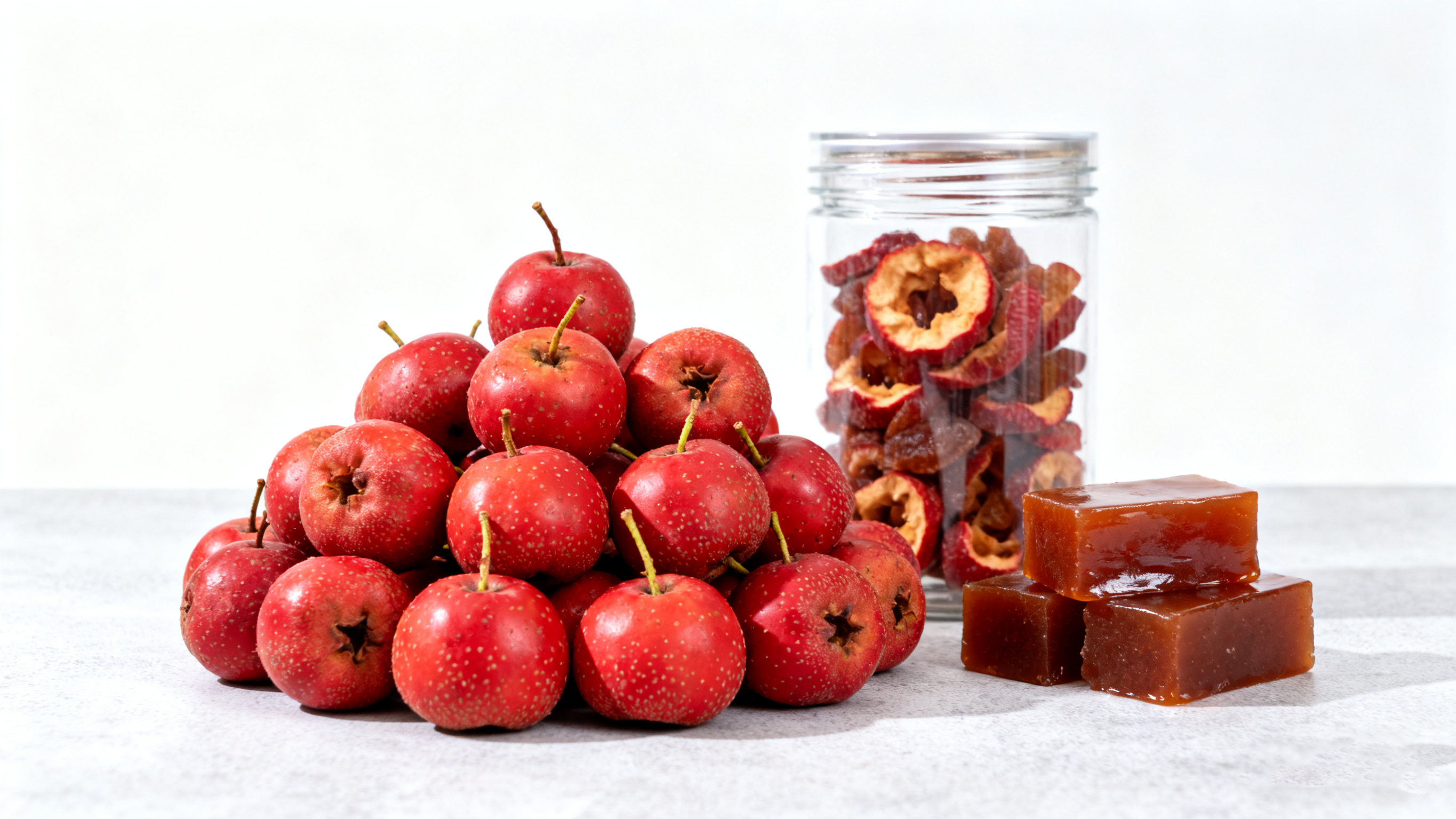
The first step in hawthorn's "transformation" begins with careful cultivation at its origin. The birth of high-quality hawthorn berries relies on suitable natural conditions and standardised planting. Taking Xinlong, Hebei - "China's Hawthorn Capital" - as an example, the sandy soil at the foot of Wuling Mountain, irrigation with mountain spring water, and abundant sunlight nurture hawthorns that are plump, moderately tart, and rich in flavonols and dietary fibre. Farmers need to thin flowers and fruits in spring, prevent pests and diseases in summer, and precisely harvest in autumn to ensure each fresh fruit meets processing standards. At this stage, the hawthorn still carries the fresh scent of the mountains, serving as the "source code" of the entire industrial chain.
After harvesting, the fresh fruit undergoes strict pre-treatment. Newly picked hawthorns are sent to washing facilities, where they are repeatedly cleaned through multiple soaking stages in mountain spring water and patented washing technology to remove surface impurities and pesticide residues. Then comes the sorting process, where uneven and substandard fruits are screened out, while quality fresh fruits are distributed according to their intended use: some for preserved fruits and candied treats, some for juicing lines, and others for deep processing workshops, achieving "whole fruit utilisation". This step is the first line of defence for flavour and safety, and the foundation of hawthorn's "transformation".
In the processing stage, different varieties of hawthorn snacks begin their own "transformation" journeys. Traditional hawthorn leather production involves pulping the hawthorn, filtering out residue, then cooking to concentrate and drying the scraped sheets, preserving the natural sweet and sour taste. Hawthorn balls require adding maltose and other ingredients to the pulp, forming a soft and sweet taste through pelletizing and sugar coating processes. The recently popular hawthorn drink is an innovation of modern technology - after removing the cores from fresh fruit, they are cooked with spring water, retaining both the whole fruit flesh and creating a refreshing juice, achieving a dual "drinkable and edible" experience. For health-conscious consumers, companies also offer low-sugar versions, replacing traditional sucrose with erythritol to align the sweet and sour flavours with modern dietary needs.
Beyond common snacks, hawthorn's "transformation" extends into high value-added areas. The peel can be used to extract flavonols for functional food development; the flesh can be made into concentrated juice and hawthorn wine, expanding into the beverage sector; even the usually discarded seeds can be distilled into antibacterial oil, truly achieving "maximum utilisation". Throughout this process, food testing and quality control are constant, from pesticide residue screening to nutritional content testing, from production environment cleanliness control to finished product sample monitoring, each step safeguarding food safety.
When packaging workshops complete sealing and labelling, each hawthorn's "transformation" journey comes to an end. From wild fruit to shelf snacks, this small fruit has gone through the complete chain of cultivation, pre-treatment, processing, quality control, and packaging, also completing its value leap from agricultural product to consumer good.
In the hawthorn industry chain, Chengde Ruitai Food Co., Ltd. is a representative enterprise. The company, leveraging Xinlong's premium hawthorn production area, has built an integrated system combining "base planting, product processing, tourism, scientific research innovation, and e-commerce sales". Their developed products like hawthorn drink and additive-free preserved fruits are highly favoured in the market. Meanwhile, Ruitai has also overcome several technical challenges in hawthorn deep processing through government-industry-academia-research collaboration, both preserving traditional flavours and promoting the technological and brand upgrading of the hawthorn industry, providing strong industrial support for the small hawthorn's "transformation" journey.
Some content is reposted from the internet. Copyright belongs to the original authors. If infringement occurs, please contact us for removal. Content involving franchising or investment carries risks - exercise caution when making decisions.
